|
AERONET-Based Study Classifies Seven Global Aerosol Types and Radiative Effects
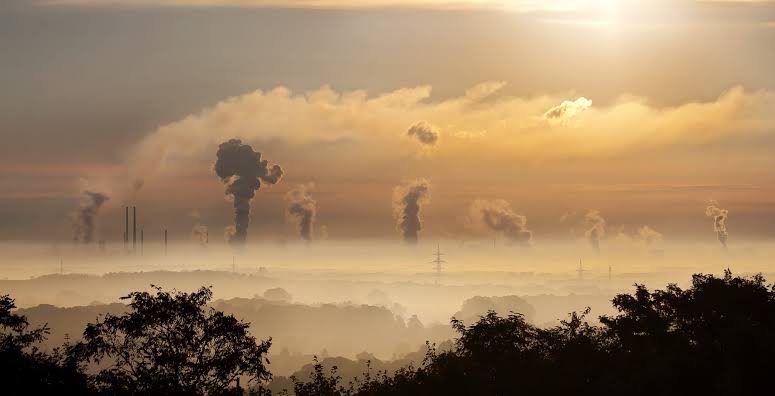
Researchers from various institutions study the classification of global aerosol types and their radiative effects using AERONET data. The study identifies seven aerosol types and links their absorption characteristics with differences in atmospheric forcing and aerosol radiative forcing across regions.
AERONET-Based Aerosol Classification and Radiative Effects :
| Dimension | Key Details |
|---|---|
| Aerosols | Aerosols comprise tiny solid or liquid particles suspended in the atmosphere, with examples including fog, dust, and spray mists. |
| Aerosol sources | Aerosols come from both nature and human activities. |
| Aerosol interactions with sunlight | Aerosols scatter, absorb, and interact with sunlight in different ways, altering the planet’s energy balance and affecting weather, clouds, and rainfall. |
| AERONET | AEROsol Robotic NETwork (AERONET) comprises a network of ground-based sun photometers which measure atmospheric aerosol properties. |
| AERONET (establishment) | AERONET is established in 1993 by NASA and PHOTONS (CNRS / University of Lille). |
| Study dataset coverage | The study analyses data from 171 AERONET sites across six continents, spanning over 30 years. |
| Identified aerosol types | Seven main aerosol types are identified: Pure dust (PD), Dust-dominated mixtures (DDM), Pollution-dominated mixtures (PDM), Very weakly absorbing (VWA), Weakly absorbing (WA), Moderately absorbing (MA), and Strongly absorbing (SA). |
| Absorption type and atmospheric forcing | Strongly absorbing (SA) aerosols produce the highest atmospheric forcing, whereas very weakly absorbing aerosols produce the lowest. |
| Atmospheric forcing | Atmospheric forcing comprises effects and energy fluctuations from the atmosphere such as wind stress, heat exchange, and precipitation that drive dynamics in underlying systems like oceans, ice sheets, or land surfaces. |
| South Asia | South Asia is largely affected by dust mixed with pollution or dust-dominated mixtures (DDM), which produces the highest Aerosol Radiative Forcing (ARF) and atmospheric heating rates. |
| North Africa | North Africa has pure dust (PD) aerosols dominance. |
| Europe and North America | Europe and North America, as urban and industrial regions, are characterised by less-absorbing aerosols: VWA, WA, and MA aerosols. |
| Tropical regions | Tropical regions, prone to biomass burning, are dominated by strongly absorbing (SA) aerosols. |
| Strongly absorbing aerosols | Strongly absorbing aerosols, those rich in black carbon, contribute significantly to atmospheric heating, with the potential to disrupt regional weather patterns and cloud formation. |
| Weakly absorbing aerosols | Weakly absorbing aerosols have a relatively minor impact on the atmosphere, primarily reflecting sunlight into space and cooling the surface. |
| Significance | Accurately identifying aerosol types is crucial for developing more reliable retrieval algorithms and assessing the impacts of air pollution on human health and ecosystems. |