|
Home Minister Pays Tribute to Rabindranath Tagore on Death Anniversary
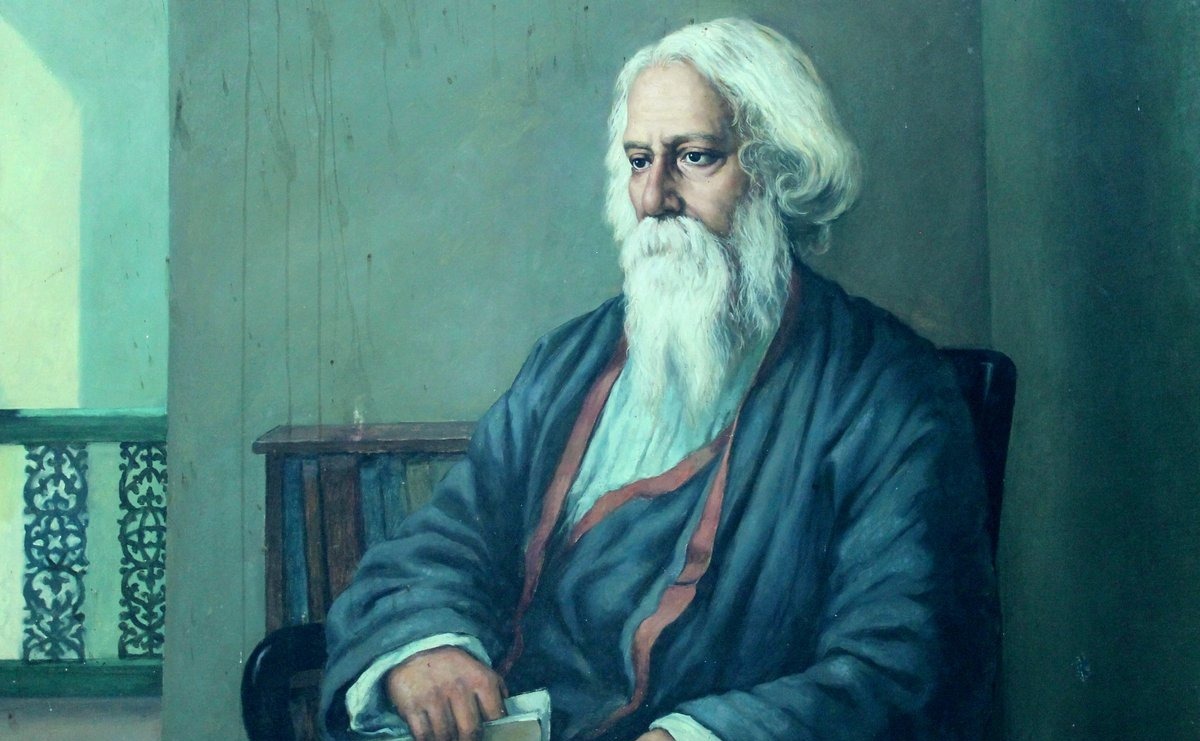
The Home Minister pays tribute to Gurudev Rabindranath Tagore on his death anniversary. The tribute brings attention to Tagore’s literary works, Nobel Prize, national anthems, and institutional contributions mentioned in the report.
Gurudev Rabindranath Tagore:
| Dimension | Key Details |
|---|---|
| Lifespan | Rabindranath Tagore lives from 1861 to 1941. |
| Birth and family | He is born in Calcutta as the youngest son of Debendranath Tagore, a leader of the Brahmo Samaj. |
| Education | He is primarily educated at home. |
| Literary output | He publishes over 50 volumes of poetry. |
| Poetry collections | His poetry volumes include Manasi (1890), Sonar Tari (1894), and Gitanjali: Song Offerings (1912). |
| Nobel Prize | He receives the 1913 Nobel Prize in Literature, becoming the first Indian and non-European laureate, awarded for Gitanjali and its deeply sensitive, beautiful poetry. |
| National anthems | He writes the national anthems of two countries: India (“Jana Gana Mana”) and Bangladesh (“Amar Shonar Bangla”). |
| Educational institution | He founds an experimental school at Shantiniketan, which is a UNESCO World Heritage Site. |
| Knighthood | He is knighted by the British government in 1915. |
| Return of knighthood | He returns his knighthood to protest against the Jalliawala Bagh Massacre (1919). |
| Values | His values comprise humanism, patriotism, freedom of thought, love for nature, creativity, and peace. |