|
India’s Camel Breeds Below Endangered Threshold
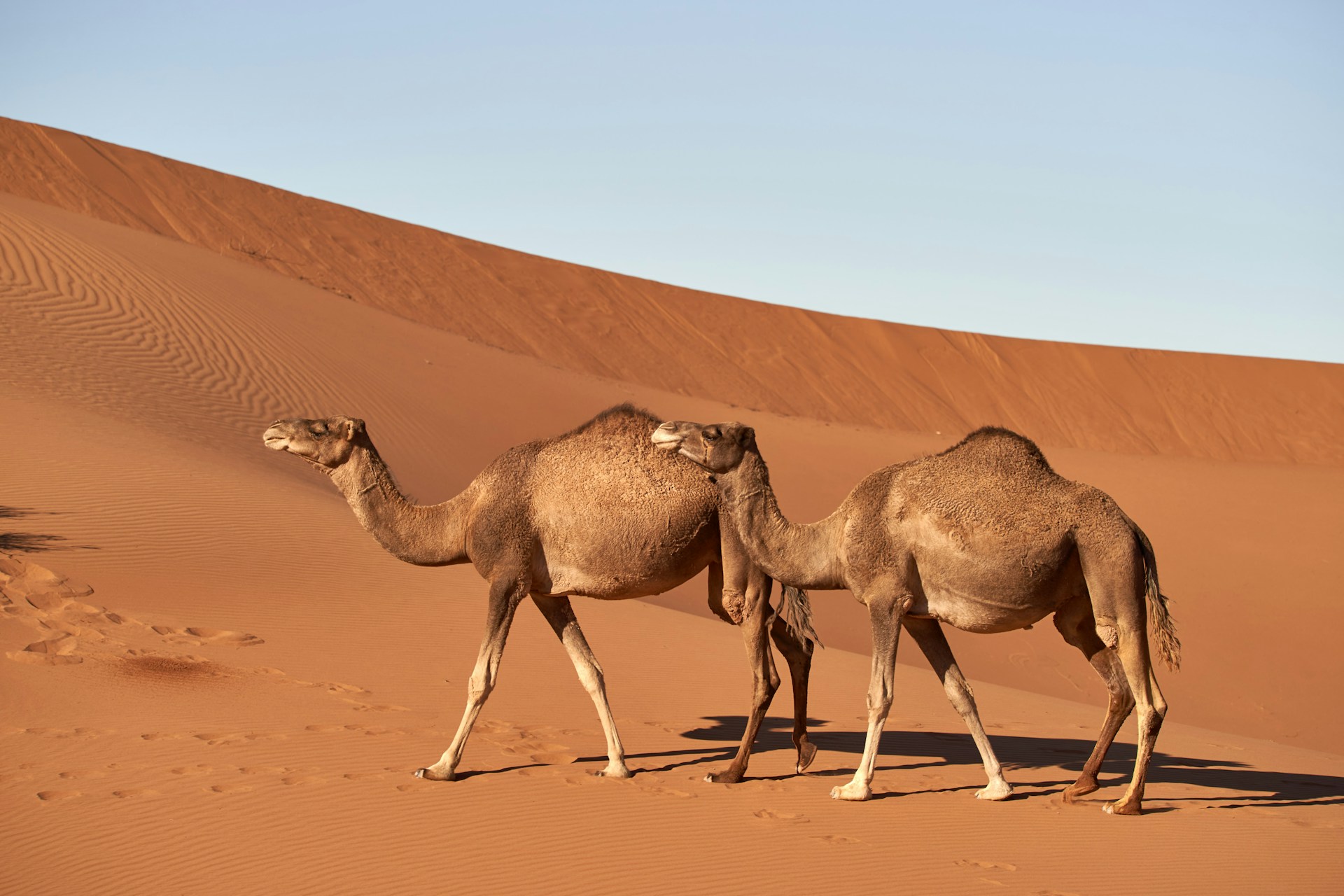
The Malvi camel breed, one of the 9 officially recognized camel breeds in India, faces a severe threat of extinction with only 102 animals remaining. Animal geneticists consider any camel breed with fewer than 300 breeding females as endangered, and the Malvi, Mewari, and Mewati breeds fall into this endangered category in India.
Malvi, Mewari, and Mewati Camel Breeds (Endangered Threshold):
| Dimension | Key Details |
|---|---|
| Official recognition | The Malvi camel breed comprises 1 of the 9 officially recognized camel breeds in India. |
| Endangered threshold | Animal geneticists consider any camel breed with fewer than 300 breeding females as endangered. |
| Affected breeds (India) | The endangered category comprises the Malvi, Mewari, and Mewati camel breeds in India. |
| Current status (Malvi camel) | The Malvi camel breed has only 102 animals remaining. |
| Physical attributes (Malvi camel) | The Malvi camel is recognised by a distinct white coat and is the smallest among all Indian camel breeds. |
| Milk yield (Malvi camel) | Females yield approximately 4–5 kg of milk per cycle. |
| Traditional uses (Malvi camel) | The Malvi camel is utilised as draft animals for rural transportation, load-carrying, and light agriculture. |
| Geographical distribution (Madhya Pradesh) | In Madhya Pradesh, the Malvi camel applies to the Malwa region districts of Mandsaur, Neemuch, Ratlam, and Gwalior. |
| Geographical distribution (Rajasthan) | In Rajasthan, the Malvi camel applies to Kota, Bundi, Jhalawar, and Baran districts. |
| Factor: loss of traditional utility | Rapid mechanization in rural transport and agriculture has reduced the demand for draft camels. |
| Factor: socio-economic shifts | Changing livelihoods and shrinking profits from traditional camel keeping have caused pastoral communities to abandon camel rearing. |
| Factor: loss of grazing commons | Encroachment and fragmentation of traditional pasture lands applies to the Malwa and Hadoti belts. |