|
Indian Army Launches Xtreme Weather Grade Diesel for LAC and LoC Winter Operations
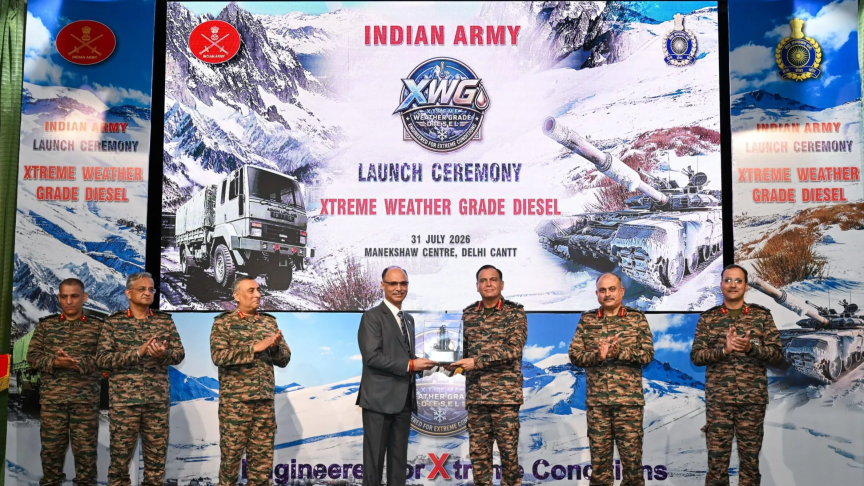
The Indian Army launches an indigenously developed Xtreme Weather Grade (XWG) diesel to enhance combat readiness in extreme cold conditions along the LAC and LoC. The fuel is jointly developed with oil marketing companies and is used for uninterrupted operation of Army vehicles and logistics fleets in high-altitude areas.
Xtreme Weather Grade (XWG) Diesel:
| Dimension | Key Details |
|---|---|
| Product | Xtreme Weather Grade (XWG) diesel is an indigenously developed fuel for extreme cold operations. |
| Temperature capability | XWG diesel provides for functioning at minus 42°C. |
| Standards and specifications | XWG diesel meets BS‑VI standards and IS 1460:2025 specifications. |
| Compatibility | It is usable across the existing Army fleet without modifications. |
| Operational benefit | XWG diesel eliminates the need for winter procedures such as running vehicles periodically to prevent fuel freezing. |
| Development | It is jointly developed with oil marketing companies in less than a year. |
| Combat-readiness utility | XWG diesel provides for uninterrupted operation of tanks, infantry combat vehicles, and the logistics fleet in high-altitude areas. |
| Mission reliability | XWG diesel reduces strain on personnel and machinery, and improves engine life. |
| Availability extension | It is extended to civilians in extreme winter regions. |
| High-altitude maintenance facilities | High-altitude maintenance facilities comprise Nyoma and Daulat Beg Oldie (DBO), above 14,500 ft. |
| Fleet supported | The supported fleet comprises T‑90 and T‑72 tanks, BMP‑2K infantry combat vehicles, and K‑9 Vajra howitzers. |