|
New Catfish Species Pseudolaguvia khairii Discovered in Odisha’s Budhabalanga River
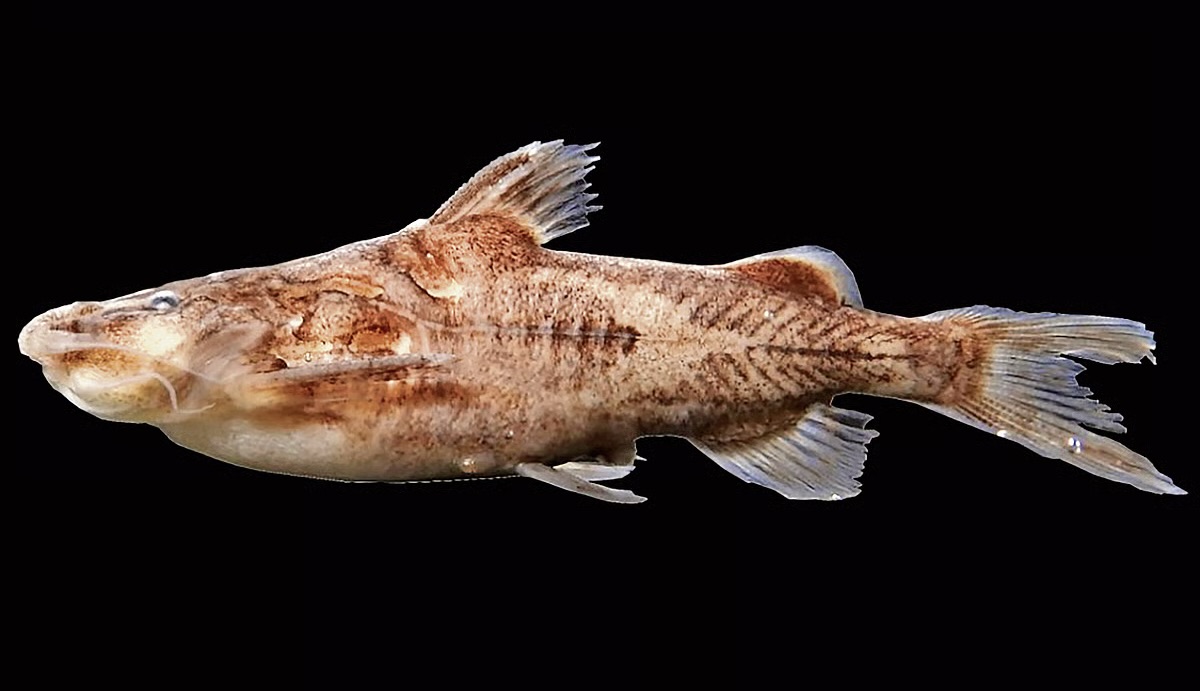
Researchers report the discovery of a new freshwater catfish species, Pseudolaguvia khairii, in the Budhabalanga River in Mayurbhanj district, Odisha. The report highlights its taxonomy, distinctive physical trait, and adaptation to fast-flowing freshwater rivers.
Pseudolaguvia khairii (New Catfish Species):
| Dimension | Key Details |
|---|---|
| Scientific name | The species comprises the scientific name Pseudolaguvia khairii. |
| Genus | The species belongs to the genus Pseudolaguvia, which comprises small hillstream catfishes. |
| Order | The species is classified under the order Siluriformes, which comprises the catfish group. |
| Discovery location | The species has been reported from the Budhabalanga River in Mayurbhanj district, Odisha. |
| Genus distribution | The genus is found in fast-flowing rivers of India, Bangladesh, Nepal, and Myanmar. |
| Size | The species measures only a few centimetres in length. |
| Distinctive feature | The species comprises a fleshy protuberance at the base of the dorsal fin, which is not recorded earlier in the genus. |
| Habitat adaptation | The species is suited to fast-flowing freshwater rivers. |
| Nomenclature | The name “Khairi” provides for a reference to a tigress rescued from Similipal forests in the 1970s and raised by conservationist Saroj Raj Choudhury and Nihar Nalini Swain. |
| Ecological role | Catfishes are indicators of healthy river ecosystems. |
| Hillstream species | Hillstream species are adapted to strong currents and are important for ecological balance. |