|
Parliamentary Standing Committee flags data gaps on Himalayan forest fires
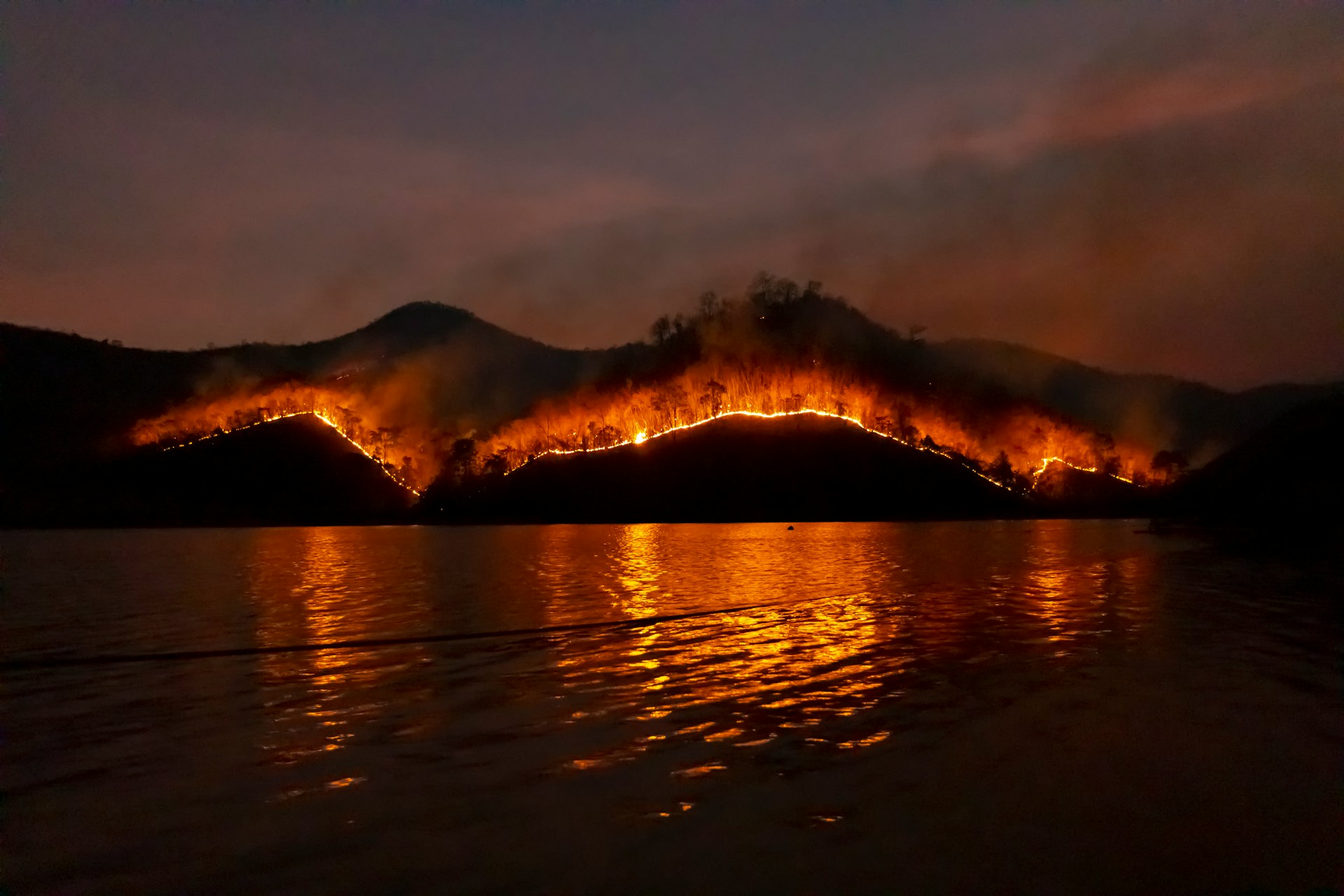
The Parliamentary Standing Committee on Science and Technology, Environment, Forests and Climate Change releases a report titled ‘Forest Fires in Himalayan Region, its adverse effects and mitigation measures’. The report flags data and monitoring gaps on Himalayan forest fires and lists specific recommendations for studies, databases, satellite monitoring, and pine-needle management.
Report on Forest Fires in Himalayan Region:
| Dimension | Key Details |
|---|---|
| Issuing authority | The report is released by the Parliamentary Standing Committee on Science and Technology, Environment, Forests and Climate Change. |
| Report title | The report is titled ‘Forest Fires in Himalayan Region, its adverse effects and mitigation measures’. |
| Evidence gap: climate change linkage | No dedicated study empirically links climate change to rising forest fire frequency in the Himalayan region. |
| Recommendation: studies for guidelines | Conduct region-specific retrospective studies and integrate findings into the Ministry's forest fire prevention and management guidelines. |
| Data gap: casualties record | Absence of a consolidated national record on forest fire casualties hampers accountability and evidence-based policymaking. |
| Recommendation: centralized database | State Governments provide for a centralized database on forest fire casualties and compensation for monitoring and policymaking. |
| Monitoring gap: satellite coverage | Reliance on foreign polar-orbiting satellites, MODIS, creates an observational gap in diurnal fire monitoring: no satellite pass between 01:30–10:30 and 13:30–22:30. |
| Recommendation: satellite for round-the-clock monitoring | The Department of Space launches a geostationary satellite capable of round-the-clock monitoring of forest fires. |
| Evidence gap: Chir Pine dominance | A historical-ecological evidence gap leaves the dominance of Chir Pine, and its role in worsening forest fires, largely unexamined. |
| Recommendation: historical-ecological study | The Forest Research Institute undertakes a dedicated historical-ecological study to trace changes in forest composition in the Western Himalayan belt. |
| Evidence gap: invasive tree species | No scientific studies exist on containing or eradicating invasive tree species despite their spread across the Western Himalayas. |
| Recommendation: programmes for invasive species and regeneration | Launch dedicated programmes: eradication of invasive species; and Himalayan Oak and Deodar Regeneration Mission for Oak and Deodar regeneration across the Western Himalayan region. |
| Operational constraint: pine needle collection | Pine needle collection is uneconomical in forests located over 500 m from motorable roads, with a limited 3–4 month collection window due to seasonal shedding and reduced utility during monsoon. |
| Recommendation: pine-needle utilisation policy | Formulate a National pine-needle utilisation policy to identify zones and provide fiscal and market-access incentives for pine needle collection. |
| Framework: biomass management | The Himalayan Biomass Management Framework recognises pine needle management as a formal forest-fire mitigation activity. |
| Recommendation: oversight board | The MoEFCC establishes a National or Regional Pine Needle Management Board for overall supervision. |