|
Scientists Identify Three New Cascade Frog Species in Northeast India
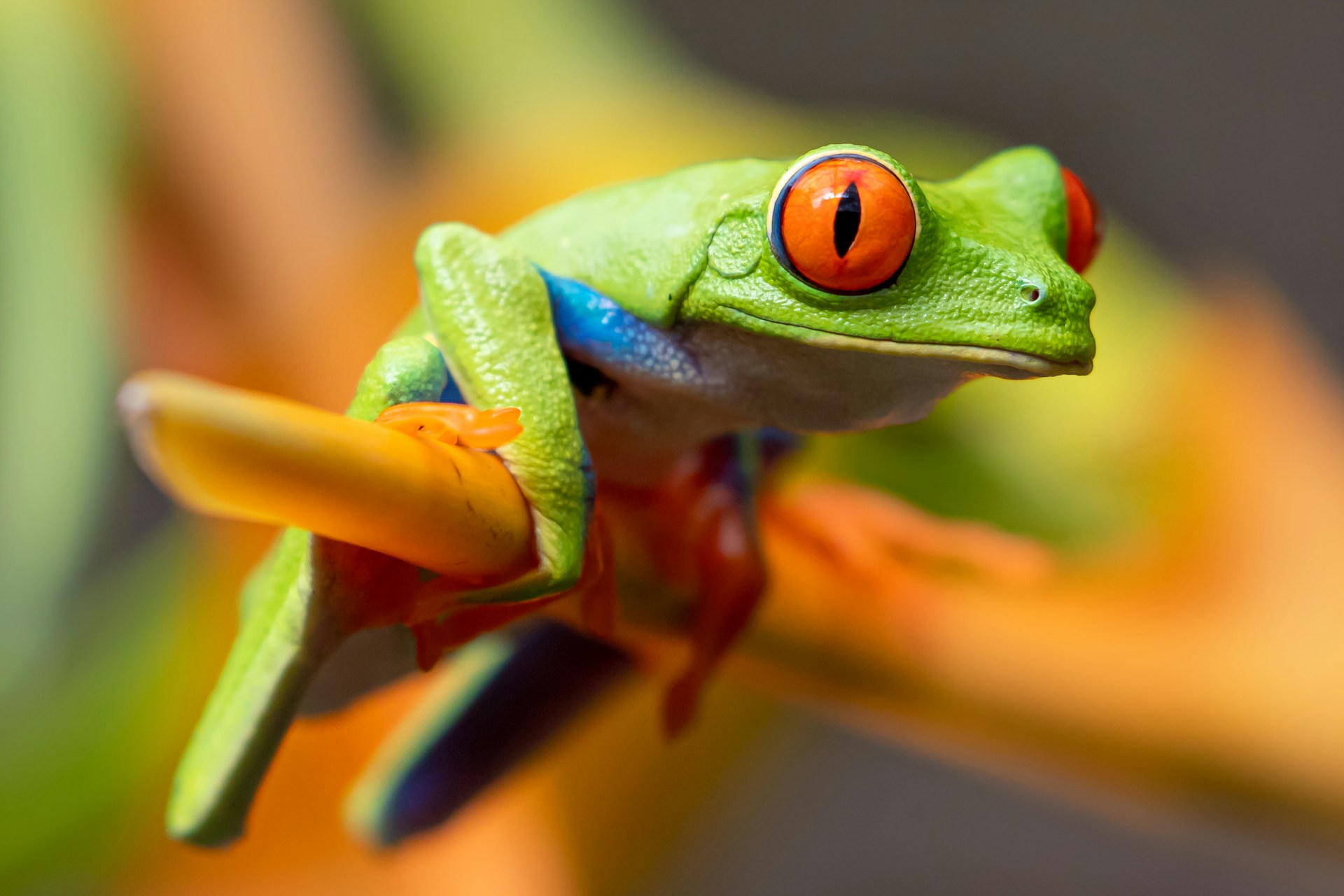
Scientists identify 3 new cascade frog species from the forests of Northeast India and document 5 other cascade frog species for the first time from India. The research documents more than 300 geographic populations of cascade frogs inhabiting fast-flowing forest streams.
Cascade Frogs (Genus Amolops):
| Dimension | Key Details |
|---|---|
| Research coverage | The research documents more than 300 geographic populations of cascade frogs. |
| Newly identified species | Three newly identified species comprise: Ammachi’s Cascade Frog (Amolops ammachi) discovered in the Jampui Hills of Tripura; Sendenyu Cascade Frog (Amolops sendenyu) found in Nagaland; Beautiful Cascade Frog (Amolops bella) discovered in West Bengal. |
| Naming details: Amolops ammachi | Amolops ammachi honours the late Kerala social worker and philanthropist Padmini Varkey, known as ‘Ammachi’. |
| Naming details: Amolops sendenyu | Amolops sendenyu is named after Sendenyu Village. |
| Naming details: Amolops bella | Amolops bella is named for its green body with yellowish-green or reddish-brown mosaic patterns. |
| Genus report: first-time India records | The study reports 5 cascade frog species never before recorded from India: Marbled Cascade Frog (Amolops afghanus), Nepal Cascade Frog (Amolops nepalicus), Wangyal’s Cascade Frog (Amolops wangyali), Medog Cascade Frog (A. medogensis), and Pianma Cascade Frog (Amolops bellulus). |
| Method used | Researchers employ DNA-based dating analyses to reconstruct the evolutionary history of cascade frogs. |
| Diversification timeline | DNA-based dating indicates extensive diversification around 32 million years ago during the Eocene-Oligocene transition. |
| Evolutionary and distribution inferences | The study suggests multiple waves of colonisation from east to west across Asia and identifies the early uplift of the Himalayas as a key factor shaping present-day distribution and diversity. |