|
Supreme Court Directs Centre to Resurvey Elephant Corridors
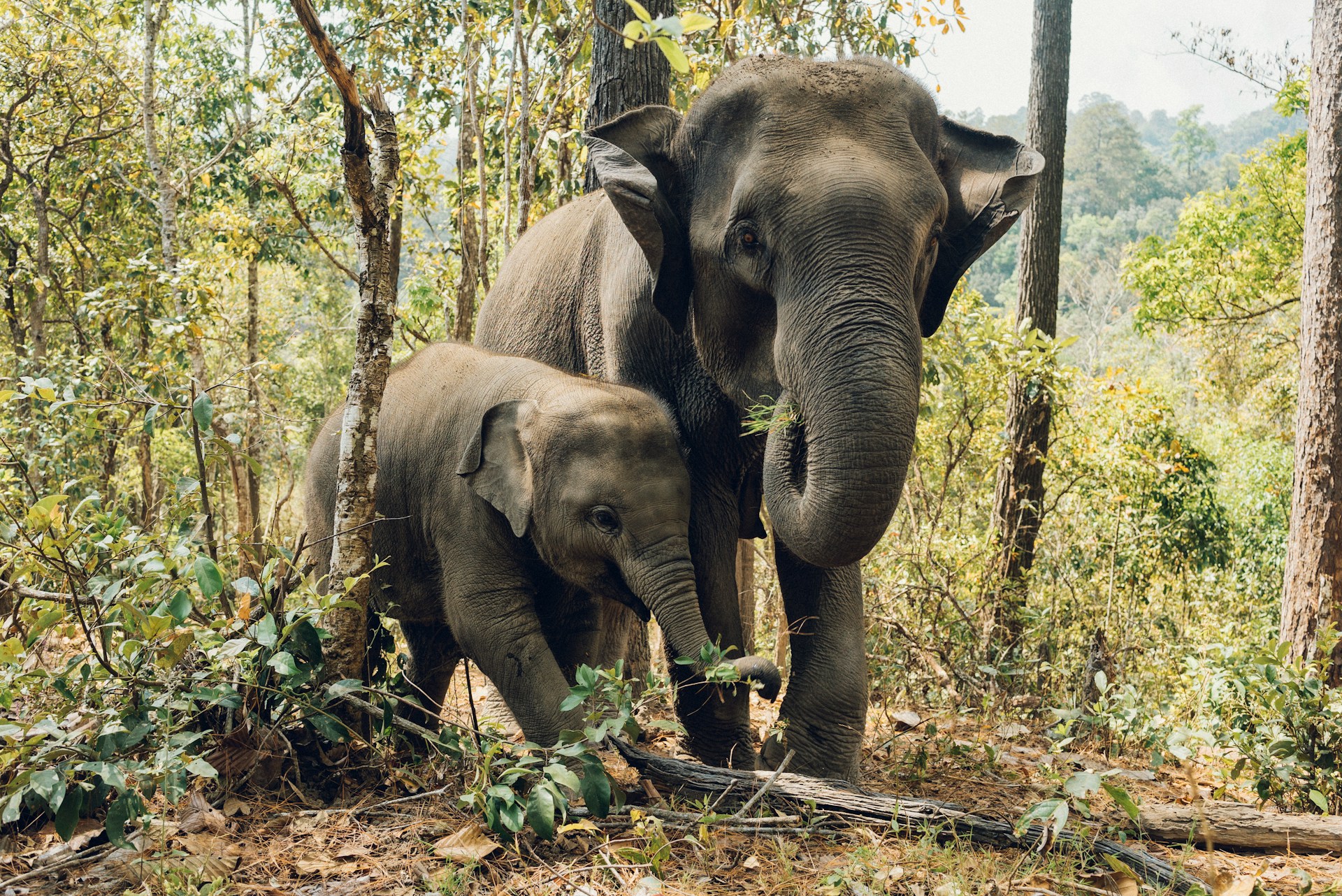
A Supreme Court bench headed by the Chief Justice of India mandates the Union government to conduct a fresh survey of elephant corridors, and rules that corridors cannot be blocked due to fears of crop damage.
Elephant Corridors in India:
| Dimension | Key Details |
|---|---|
| Case context | The ongoing writ petition applies to managing human-elephant conflict. |
| Coercive measures | The writ petition provides for a request to ban methods such as fireballs, spikes, and similar methods to drive elephants away. |
| Court direction on coercive measures | The Court mandates the Centre to report on steps taken to prohibit “coercive measures” that divert elephants’ natural movement. |
| Asian elephant mobility | Asian elephants comprise highly mobile, social mammals. |
| Home range (male Asian elephant) | A male elephant’s home range comprises 50 to 300 square kilometres, expanding further depending on resource availability. |
| Determinants of home range variation | Home range variation comprises habitat type, food and water availability, population density, and human disturbance. |
| Institutional sources | Studies by the National Centre for Biological Sciences and the Wildlife Institute of India comprise findings that elephant movement is strongly shaped by seasonal food and water distribution. |
| Example of seasonal movement | Elephant movement comprises migration into Kerala during dry months, drawn to the relatively moist forests of the Western Ghats. |
| Corridor functions for movement | Corridors provide for elephants to find food, disperse naturally, and move seasonally. |
| Corridor disruption drivers | Corridor disruption comprises infrastructure, mining, and farmland expansion. |
| Principal elephant landscapes and population distribution | India’s four principal elephant landscapes comprise: Western Ghats (11,934 elephants, 53.2%) across Karnataka (6,013), Tamil Nadu (3,136), and Kerala (2,785); North-Eastern Hills and Brahmaputra floodplains (6,559 elephants, 29.2%); Shivalik Hills and Gangetic plains (2,062 elephants, 9.2%); Central India and Eastern Ghats (1,891 elephants, 8.4%). |
| Total elephant population estimate | India’s total elephant population comprises 22,446 (SAIEE 2021-25). |
| Fragmentation drivers (Western Ghats) | Fragmentation drivers in the Western Ghats comprise changing land use, coffee and tea plantations, invasive plant species, and farmland fencing. |
| Fragmentation drivers (Shivalik and Brahmaputra plains) | Fragmentation drivers in the Shivalik Hills and Brahmaputra plains comprise railway lines, roads, power infrastructure, and other land-use changes. |
| Movement drivers (Central India and Eastern Ghats) | Movement drivers in Central India and the Eastern Ghats comprise El Niño-linked drought in erstwhile southern Bihar and iron ore mining in Jharkhand and Odisha. |
| Recent movement pattern (Central India and Eastern Ghats) | Over the past two decades, elephants have moved into Chhattisgarh from Jharkhand and Odisha owing to habitat loss and mining pressure, and have expanded into Umaria and Shahdol (Madhya Pradesh) and Gadchiroli (Maharashtra). |
| Genetic function of corridors | Corridors provide for genetic exchange between fragmented elephant populations, maintaining genetic diversity. |
| Government corridor mapping (2023) | The government’s last major corridor-mapping exercise in 2023 comprises 150 elephant corridors across 15 States within the four major landscapes. |
| Human-elephant conflict report (South India) | A subsequent report on human-elephant conflict in South India comprises bottlenecks across 32 corridors in the region. |
| Obstructions cited in bottlenecks | Obstructions cited comprise highways, railway projects (such as the Bengaluru-Chennai line), hydel projects, high-tension power lines, electric fences, quarries, corridor narrowing, tea and coffee estates, resorts, and ashrams. |
| State with highest number of corridors | West Bengal comprises 26 corridors across its northern and southern regions. |
| Corridor example (dimensions and movement) | The Charmar-Jingol corridor, largely in Chhattisgarh, comprises 20 km length and 2.5 km width, and provides for movement of an estimated 80-100 elephants from Odisha into Chhattisgarh’s interior. |