|
Undersea warfare focus
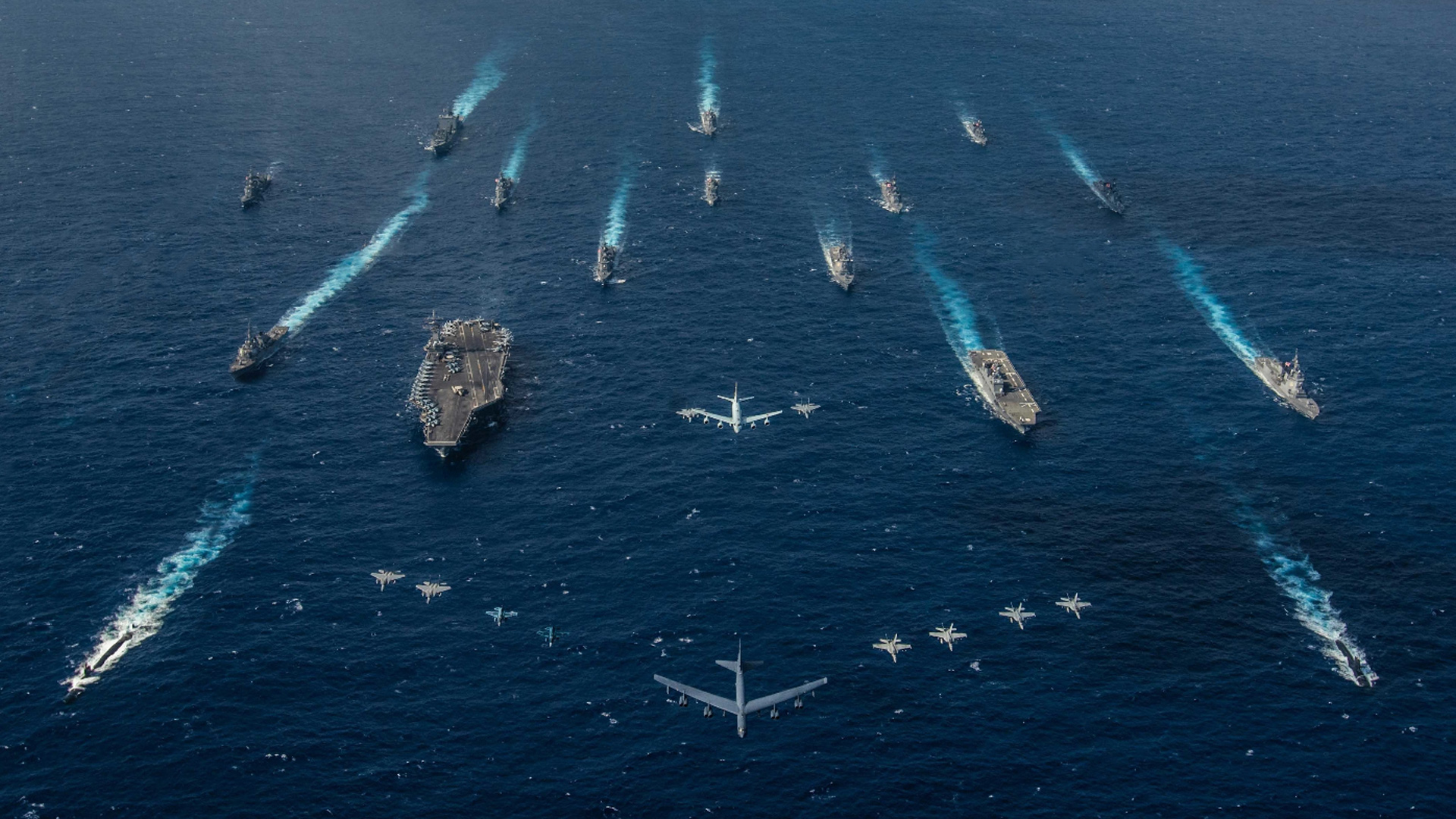
Navies worldwide are investing considerable resources in autonomous maritime systems for undersea warfare and multi-domain operations. India commissions INS Arihant and Arighat, accelerates submarine projects, and pursues DRDO-developed undersea technologies alongside India-US anti-submarine warfare collaboration.
Undersea Warfare and Autonomous Maritime Systems:
| Dimension | Key Details |
|---|---|
| Autonomous systems | Comprises Uncrewed Undersea Vehicles (UUVs), Uncrewed Surface Vessels (USVs), and ship-launched Uncrewed Aerial Vehicles (UAVs). |
| UUV deployment mechanism | Comprises UUVs that can be deployed and recovered through a submarine's torpedo tube. |
| USV capability | Comprises USVs endowed with vertical launch systems. |
| Ship-launched UAV role | Comprises ship-launched UAVs capable of performing multi-domain ISR and targeting operations. |
| Operational focus | Provides for protection of critical undersea infrastructure, including subsea cables and pipelines, while ensuring strategic deterrence through secure second-strike capabilities. |
| India commissioned platforms | Has commissioned INS Arihant and Arighat. |
| India submarine projects | Comprises Project 75(I) for AIP submarines and Project 77 for indigenous SSNs. |
| DRDO developments | Comprises DRDO development of AI-enabled autonomous underwater vehicles and a Fibre Optic Sensing System for seabed mapping and submarine detection. |
| India-US collaboration | Comprises India-US collaboration for anti-submarine warfare (ASW). |
| Recommendations listed | Comprises recommendations: fast-track Project 75(I) and Project 77; establish a dedicated Seabed Warfare Command for surveillance and protection of critical undersea infrastructure; integrate crewed and uncrewed platforms and deepen Quad/UDA partnerships for co-development of autonomous systems; expand P-8I Poseidon aircraft and Sea Guardian drones for anti-submarine surveillance across key maritime choke points. |