Current Affairs

pib_logo

And other top trusted sources

August 11, 2026

Environment

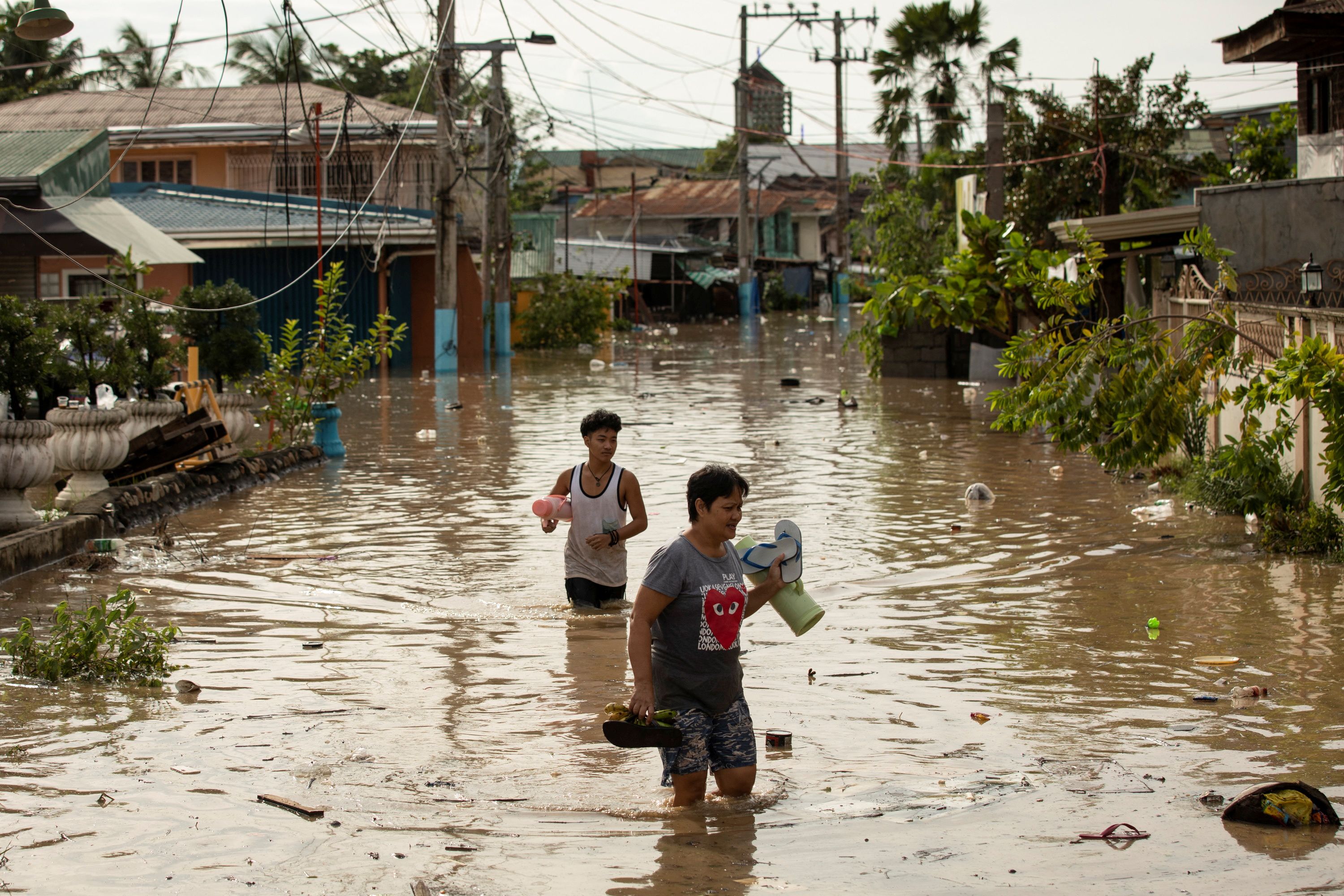
MHA Notifies Heatwaves and Lightning as Disasters

Operational guidelines for SDRF/NDRF (2026-31) add heatwaves and lightning to India’s notified natural disasters, taking the list to 14 (earlier 12: cyclone, drought, earthquake, fire, flood, tsunami, hailstorm, landslide, avalanche, cloudburst, pest attack, frost/cold wave). States can use full SDRF/mitigation funds; NDRF supplements if SDRF is inadequate. Under the Disaster Management Act, 2005 (replacing NCCF in 2010), SDRF provides immediate relief only (no crop/property compensation); Centre shares 75% (90% for NE states, Sikkim, Uttarakhand, Himachal Pradesh, J&K). NDRF is fully Centrally financed via cesses/duties in Public Account. Heat-health actions align with NPCCHH/NAPHRI; NHRIDS covers 51,000+ reporting units.

MHA Notifies Heatwaves and Lightning as Disasters
Down to EarthDown to Earth
Science & Technology

Microsoft Opens Fourth India Cloud Region in Hyderabad

Microsoft opened its largest India data centre in Hyderabad, adding its fourth India cloud region and expanding Azure’s footprint to Hyderabad, Pune, Chennai and Mumbai. The cloud infrastructure is positioned as the backbone for AI services, supporting AI-led computing demand and enterprise digitalisation as India’s data centre sector matures. The expansion occurs amid competition in India’s cloud market with Google and Amazon; AWS, Microsoft and Oracle are also scaling via owned regions and colocation partnerships.

Microsoft Opens Fourth India Cloud Region in Hyderabad
Economic TimesEconomic Times
Reports

India Leads Global IPO Count Ranks Third in Funds Raised After US, Hong Kong

SEBI’s Annual Report states India leads globally in number of IPOs and ranks third in funds raised after the United States and Hong Kong (China). SEBI authorised a new Closing Auction Session (CAS) and updated indicators on corporate bond mobilisation and investor participation. Corporate bond mobilisation fell 8.4% to ₹9.1 lakh crore (first fall in four years). FPI ownership hit a 15-year low; DII holding reached 17% by March 2026. Mutual funds expanded via Tier-3 cities; monthly SIPs averaged over ₹16,400 crore. 62% retail investors were influenced by social-media financial influencers; investor protection measures were strengthened.

India Leads Global IPO Count Ranks Third in Funds Raised After US, Hong Kong
News On AirNews On Air

Environment

SBSTTA-28 Reviews CBD Biodiversity Targets Ahead of COP17 Yerevan

SBSTTA-28 in Nairobi is giving scientific, technical and technological advice under the UN Convention on Biological Diversity ahead of CBD COP17 in Yerevan, Armenia. It reviews Kunming-Montreal Global Biodiversity Framework (2022) 23 goals for 2030; 129 national reports show most targets off-track, with slow finance / technology / capacity to developing countries. Agenda includes marine/coastal biodiversity, wildlife management, protected areas and IPBES work, plus synthetic biology: gene-engineering tools with patents concentrated; benefits and ecological/regulatory concerns. COP16 Cali (2024) mandated an action plan and expert group; IUCN Abu Dhabi (Oct 2025) backed case-by-case releases. A draft SBSTTA thematic plan seeks sharing funds, training and technology.

SBSTTA-28 Reviews CBD Biodiversity Targets Ahead of COP17 Yerevan
Down to EarthDown to Earth
Environment

Assam Releases Captive-Bred Slender-Billed Vultures at Kaziranga

Assam recorded the world’s first release of captive-bred slender-billed vultures (Gyps tenuirostris): five birds bred at the BNHS conservation facility were released at the Jatayu Soft Release Centre, Kaziranga National Park and Tiger Reserve. Gyps vultures in India declined ~99% in 20 years due to veterinary painkillers; Centre banned diclofenac, aceclofenac, ketoprofen and nimesulide. Species is an Old-World vulture, Critically Endangered since 2002; pesticide poisoning remains a threat in Assam.

Assam Releases Captive-Bred Slender-Billed Vultures at Kaziranga
The HinduThe Hindu
Defence

MHA National Security Guidelines: Ban renewable projects within 1 km of borders

The Ministry of Home Affairs issued national security guidelines for renewable energy projects in border areas (LoC, LAC, IB). Solar, wind and hybrid projects are banned within 1 km of the international border. Projects up to 50 km from the IB need security clearance; those within 20 km of LoC/LAC/IB require Defence NOC. Applications go only to MNRE. Hiring personnel from Pakistan, Bangladesh or China needs MHA permission. Existing projects: small near LAC; large near IB (Rajasthan, Gujarat); LoC (J&K) mostly solar rooftops; Kargil/Ladakh solar PV.

MHA National Security Guidelines: Ban renewable projects within 1 km of borders
The HinduThe Hindu
Places in News

Survey of India Map Update Marks 27 Locations in Arunachal Pradesh

Survey of India updated its maps by formally identifying and marking 27 locations and geographical features in Arunachal Pradesh with standard Indian names, amid repeated Chinese attempts to rename places. Marked features include land, passes, a lake and a monument. Listed examples include Long Ju (along the Line of Actual Control), Bisa village, Dzo La, Riza La, Pukur La, Thag La and Jairampur, a key logistics hub in Changlang district for security force movement towards eastern Arunachal and the Myanmar frontier. India termed China’s renaming “vain and preposterous” and reaffirmed Arunachal Pradesh as an integral part of India.

Survey of India Map Update Marks 27 Locations in Arunachal Pradesh
The HinduThe Hindu

August 10, 2026

Economy

India Reports 68 Renewable Grid Disturbances

India reported 68 renewable grid disturbances (Jan 2022-Jun 2025), causing 1-7 GW loss, mainly in Rajasthan and Gujarat, linked to variable solar/wind output, non-compliance with LVRT/HVRT (ride-through during voltage disturbances) and frequency instability; STATCOMs can provide rapid voltage support. Installed capacity: 548 GW (Jul 2026); solar 162 GW, wind 47 GW; renewables grew >200% in a decade. FY2026 added 44.61 GW, incl. 16.3 GW distributed solar (PM-KUSUM, rooftop). Transmission planned for 500 GW non-fossil by 2030; measures include ISTS charge waivers and RPOs. Storage need: USD 1.15 tn (2025-2050), USD 3.3 tn (2051-2070). Peak demand rose 242.77 GW (Jun 2025) to 270.8 GW (May 2026); CEA projects 459 GW (2034-35), global estimates 700 GW (2047). EVs may be 6-9% consumption by 2035; data centres may need 14-30 GW by early 2030s.

India Reports 68 Renewable Grid Disturbances
Down to EarthDown to Earth
Science & Technology

E‑Eye Detects Arsenic, Lead, Fluoride and E. coli in Water Sources

Researchers at IIT Guwahati developed “E‑Eye”, a portable optical sensing device for on-site water quality testing, especially in rural areas. It detects arsenic, lead, iron, chromium, fluoride and E. coli. Priced ~₹3,500 with ~₹2 per test, it uses Beer‑Lambert law and colour-intensity readouts, giving digital concentrations comparable to UV‑Visible/Atomic Absorption spectrophotometers, with wireless transmission and support to Jal Jeevan Mission.

E‑Eye Detects Arsenic, Lead, Fluoride and E. coli in Water Sources
The PrintThe Print
Reports

CII–EY Report: India’s Energy Security Shift to Critical Minerals, Storage, Grid

CII-EY India report flags India’s energy security risks beyond oil and gas to critical minerals, manufacturing, storage and grid. India is fully import-dependent for lithium, cobalt, nickel, silicon, rare earths, gallium, germanium and PGE; 2025-2070 demand: 66 MT copper, 46 MT graphite, 19.5 MT silicon, 11.5 MT nickel. Per capita power use rises 780 kWh (2015-16) to 1,153 (2024-25). Storage investment: USD 1.15 tn (2025-2050), USD 3.3 tn (2051-2070); T&D: USD 2 tn+. Nuclear projected 100 GW by 2047; non-fossil nearing 300 GW, target 500 GW by 2030; PM Surya Ghar boosts rooftop solar. Oil use doubles to 243 MT (FY26); SPR approved 11.8 MT; recommends domestic exploration, processing, recycling, diversified imports and partnerships.

CII–EY Report: India’s Energy Security Shift to Critical Minerals, Storage, Grid
Down to EarthDown to Earth
Environment

New Catfish Species Described from Likimro River, Nagaland

New catfish species Pseudecheneis likimroensis was described from the Likimro river, Kiphire district, Nagaland, in the Tizu-Chindwin drainage of the Indo-Myanmar biodiversity hotspot. Genus Pseudecheneis comprises rheophilic hill-stream catfishes. About five specimens were collected at 446 m. It has a dorso-ventrally flattened body and adhesive ridges/grooves for boulder-rich torrents; carnivorous. Threats include dynamite/chemical fishing, river modification, coal mining, and overfishing; endemism driven by tectonic uplift and river-course changes.

New Catfish Species Described from Likimro River, Nagaland
Read moreRead more
Governance

Indian Statistical Institute Bill 2026 Seeks New Governance Model for ISI

Government introduced the Indian Statistical Institute Bill, 2026, replacing the Indian Statistical Institute Act, 1959, to overhaul ISI governance. ISI, founded in 1931 by P.C. Mahalanobis and declared an Institution of National Importance in 1959, is currently a society with a 33-member council. The Bill makes ISI a statutory body corporate, with the President as Visitor, a Centre-nominated Board of Governance, an Academic Council, revised director appointment, and Visitor powers; critics cite autonomy concerns.

Indian Statistical Institute Bill 2026 Seeks New Governance Model for ISI
Indian ExpressIndian Express
Reports

Parliamentary Standing Committee on Home Affairs flags gaps in cybercrime

Department-related Parliamentary Standing Committee on Home Affairs report ‘Cyber Crime – Ramifications, Protection and Prevention’ flags gaps in intermediary grievance redressal, OTT self-regulation, offshore ads, payment fraud probes, CBI jurisdiction, complaint-to-FIR conversion, cyber education and laws. Recommends standardized multilingual grievance system; independent OTT post-release panel with age-verification/parental controls; ad identity checks and zero-trust monitoring; operational CPFIR; amend DSPE Act, 1946; NCRP-to-e-FIR via I4C; graded cyber-safety curriculum; permanent law-review; unified technology-neutral cybercrime law and Integrated Cybercrime Task Force.

Parliamentary Standing Committee on Home Affairs flags gaps in cybercrime
PIBPIB
Reports

Parliamentary Standing Committee’s 166th Report on Tribunal System

Department-related Parliamentary Standing Committee on Personnel, Public Grievances, Law and Justice presented its 166th Report reviewing India’s tribunal system, citing vacancies (ITAT: 27/126 Members, all 7 Deputy Registrars; NGT: 5 Judicial, 6 Expert vs statutory minimum 10 each), contractual overreliance (NCLT >95% admin; TDSAT staff 52 frozen since 2001), rising pendency (ITAT +19,275 in 5 months; NCLT CIRP breaches), weak infrastructure (NCLT below NCMS; RCT lacks capital budget, depends on Zonal Railways), IT gaps (NGT no IT section; NCLT e-portal obsolete; NCLT 2.0; cyber-audits), and access gaps (RCT legal aid 9/23; “Zero FIR” filing).

Parliamentary Standing Committee’s 166th Report on Tribunal System
PIBPIB
Important Days

Home Minister Pays Tribute to Rabindranath Tagore on Death Anniversary

On his death anniversary, the Home Minister paid tribute to Rabindranath Tagore (1861–1941). Born in Calcutta, youngest son of Debendranath Tagore (Brahmo Samaj), he was largely home-educated and produced over 50 poetry volumes, including Manasi (1890), Sonar Tari (1894) and Gitanjali (1912). He won the 1913 Nobel Literature (first Indian, non-European). He authored India’s “Jana Gana Mana” and Bangladesh’s “Amar Shonar Bangla”, founded Shantiniketan (UNESCO World Heritage), was knighted in 1915 and returned it after the 1919 Jallianwala Bagh massacre.

Home Minister Pays Tribute to Rabindranath Tagore on Death Anniversary
News On AirNews On Air
August 8, 2026

Environment

Nature Ecology & Evolution Study Tracks Butterfly Range Shifts Across 105 Countries

A Nature Ecology & Evolution global study analysed range shifts in 1,758 butterfly species across 105 countries, linking patterns to climate and human threats. It found 80% expanded and 79% shifted to cooler regions; 27% contracted; 22% showed elevational shifts. Europe is a hotspot (UK: 63% horizontal contraction; Mexico: 39% vertical shifts). India’s Tawny Coster expanded into Australia at 135 km/year. It cites niche conservatism, calls for dynamic conservation (micro-refugia, connectivity) and notes Paris 1.5-2°C relevance.

Nature Ecology & Evolution Study Tracks Butterfly Range Shifts Across 105 Countries
Down to EarthDown to Earth
International

India-Lesotho Review Ties at 6th Joint Commission Meeting

India and Lesotho held the 6th Joint Commission Meeting in New Delhi, reviewing cooperation in trade/economic relations, development partnership, skilling and capacity building, and coordination in regional and multilateral forums; next Joint Bilateral Commission for Cooperation will meet in Maseru in 2027. Lesotho is a landlocked enclave within South Africa; capital Maseru; in Maloti-Drakensberg; “Kingdom in the Sky”, entirely above 1,400 m, with over 80% above 1,800 m; southernmost landlocked state.

India-Lesotho Review Ties at 6th Joint Commission Meeting
DD NewsDD News
Environment

Chhattisgarh to Translocate Asiatic Wild Water Buffaloes from Assam

Chhattisgarh has proposed translocating Asiatic wild water buffaloes (Bubalus arnee) from Assam to revive its declining wild buffalo population. The species occurs in India, Nepal, Bhutan, Thailand and Cambodia; in India, major populations are in Assam’s Kaziranga National Park, with smaller populations in Meghalaya, Chhattisgarh and Maharashtra. India hosts >90% of the global population (~3,500–3,700). Habitat includes grasslands, alluvial plains and marshes. It is Schedule I (Wildlife Protection Act, 1972), IUCN Endangered, and CITES Appendix III.

Chhattisgarh to Translocate Asiatic Wild Water Buffaloes from Assam
Indian ExpressIndian Express
Important Days

12th National Handloom Day

National Handloom Day is observed on 7 August; 2026 marks the 12th observance, commemorating the 1905 Swadeshi Movement (boycott of foreign goods, indigenous manufacturing, Atmanirbharta). Key programmes: NHDP, SCDP and Mega Cluster Development Programme for weaver welfare, infrastructure, productivity and market linkages. Union Budget 2026-27: National Fibre Scheme, Textile Expansion & Employment Scheme, National Handloom & Handicraft Programme, Mahatma Gandhi Gram Swaraj Initiative. Measures include Handloom Marketing Assistance, Weaver MUDRA, PMJJBY/PMSBY, scholarships; Handloom Mark, India Handloom Brand, GI, Handlooms Act 1985, GeM, Indiahandmade portal, 5% GST (selected products). Challenges: powerloom imitation/counterfeiting, low incomes/credit, high input costs, low productivity, middlemen; modernization via traceability (blockchain) and digital integration.

12th National Handloom Day
The HinduThe Hindu
Economy

GI and Beyond 2.0 Summit: Launched Digital Handloom Atlas

GI and Beyond 2.0 summit showcased India’s GI-tagged handloom/handicraft products and launched the Digital Handloom Atlas (“One Platform. Endless Markets”) to enhance visibility and connect artisans with domestic and international markets. Organised by the Office of the Development Commissioner (Handlooms), Ministry of Textiles, with HEPC. 

GI certificates: Ladakh Nambu, Ladakh Pashmina, Himachal Gudma, Himachal Lingchay, Jharkhand Bamboo Craft, Jharkhand Tussar Saree/fabrics, Munda Jewellery, Bareilly Terracotta. HEPC Diamond Jubilee logo marked 60 years.

GI and Beyond 2.0 Summit: Launched Digital Handloom Atlas
PIBPIB
Defence

Agni-4 Medium-Range Ballistic Missile Test-Fired

India test-fired the Agni-4 medium-range ballistic missile to demonstrate operational readiness; all critical systems performed as expected. The Agni series evolved from a re-entry vehicle technology demonstrator into a ballistic missile family under the Integrated Guided Missile Development Programme. Agni-4, under Strategic Forces Command, has ~4,000 km range and 1,000 kg payload, supporting credible minimum deterrence; ballistic missiles follow powered boost then free-fall trajectory.

Agni-4 Medium-Range Ballistic Missile Test-Fired
PIBPIB
Organisations

10th BRICS Industry Ministers’ Meeting under India’s BRICS Chairship 2026

The 10th BRICS Industry Ministers’ Meeting concluded under India’s BRICS Chairship 2026, adopting outcomes on industrial cooperation, MSME ecosystems, photovoltaics, startups, and the BRICS Partnership on the New Industrial Revolution (PartNIR). It issued a Joint Declaration to strengthen industrial cooperation, adopted an MSME Framework, created a Photovoltaic Working Group, and endorsed a Startup Action Plan, including India’s proposals for a BRICS Incubator Network and Startup Innovation Fund; PartNIR supports practical collaboration, knowledge sharing, capacity building, and industrial innovation.

10th BRICS Industry Ministers’ Meeting under India’s BRICS Chairship 2026
PIBPIB
Economy

Inventory-Based Cross-border E-Commerce Export Framework Operationalised

Centre operationalised the E-commerce Export Framework under FTP 2023, allowing inventory in India only for confirmed overseas orders, banning speculative build-up. Exports run via an Exporter-on-Record procuring from Sellers-on-Record and exporting in its name. It mandates seller payments within timelines, visibility of sale/tracking, proportional rebates/refunds, digital traceability preventing domestic diversion, bank compliance certification, and re-export/return/disposal of rejected consignments for manufacturers, traders, MSMEs and artisans.

Inventory-Based Cross-border E-Commerce Export Framework Operationalised
News On AirNews On Air

Schemes

Union Cabinet Approves GOBARdhan as National Circular Bioenergy Scheme

Union Cabinet approved GOBARdhan as India’s National Circular Bioenergy Scheme, a unified national framework for Compressed Biogas (CBG) with digital governance. It covers agricultural residue, cattle dung, press mud, municipal organic waste and biomass, converting them into clean fuel, Fermented Organic Manure (FOM)/Liquid FOM and rural income. Growth engines include assured offtake with CNG/PNG blending obligation (3% FY2026-27, 4% FY2027-28, 5% from FY2028-29), administered price ₹2,110/MMBTU (10-year horizon), capital assistance up to ₹2 crore/TPD, pipeline connectivity, credit guarantee and a district-level challenge fund; aims include domestic CBG growth, lower imports and emissions.

Union Cabinet Approves GOBARdhan as National Circular Bioenergy Scheme
The HinduThe Hindu
Governance

Lok Sabha Passes Bankers’ Books Evidence Bill, 2026

Lok Sabha passed the Bankers’ Books Evidence Bill, 2026 by voice vote, repealing and replacing the Bankers’ Books Evidence Act, 1891 on admissibility of bank records. “Bankers’ books” is expanded to physical, electronic, digital, virtual and cloud records. It prescribes standard certificate formats and authentication via manual/digital/electronic signature, recognises electronic records as evidence, allows production in physical/electronic form, empowers Centre to extend to other financial entities by notification, and enables courts to compel bank officers to produce records/testify even when the bank is not a party.

Lok Sabha Passes Bankers’ Books Evidence Bill, 2026
NDTVNDTV

August 7, 2026

Governance

Supreme Court Issues Notice on Petitions Challenging CAPF Act, 2026

Supreme Court issued notice to the Union on petitions by serving CAPF officers (CRPF, BSF, ITBP and others) challenging the Central Armed Police Force (General Administration) Act, 2026. They seek to declare Sections 3 and 4 ultra vires: Section 3 reserves senior posts for IPS (50% IG, 67% ADG, 100% Special DG and DG); Section 4 permits schedule changes by notification. Petitioners cite Articles 14, 16, 21 and separation of powers, alleging override of a binding SC judgment.

Supreme Court Issues Notice on Petitions Challenging CAPF Act, 2026
The HinduThe Hindu
Environment

India Launches National Clouded Leopard Conservation Action Plan

India launched its first national Clouded Leopard Conservation Action Plan on International Clouded Leopard Day (August 4). Prepared under a joint Government of India-GEF-UNDP initiative with the Wildlife Institute of India, it identifies 14 conservation zones in Northeast India, mandates surveys (camera traps, occupancy modelling, genetic analysis, eDNA), uses M-STrIPES for anti-poaching patrol monitoring, adopts adaptive management for high-altitude habitats, and reduces conflict. Species: Neofelis nebulosa/Neofelis diardi; IUCN: Vulnerable; <10,000 mature individuals. The day was instituted in 2018 by the Aspinall Foundation (UK), highlighting deforestation and illegal trade.

India Launches National Clouded Leopard Conservation Action Plan
News On AirNews On Air
Science & Technology

IN-SPACe Issues Authorisation Guidelines for Planned Re-entry of Space Objects

IN-SPACe issued guidelines mandating authorisation for planned re-entry (controlled return of satellites/launch vehicles/space objects with managed landing area, time or trajectory), unlike uncontrolled atmospheric decay. Indian entities need approval even outside India; foreign entities only via Indian-incorporated firms. Casualty risk must be <1/10,000, with mandatory third-party liability insurance and full company risk. Disclose intent at application, re-verify 3 months prior; late decisions apply ≥6 months before. Full burn-up disposals exempt. Submit mission/trajectory, de-orbit/failure, fragmentation/survivability, casualty/reliability, danger zones/mitigation; IN-SPACe advisory enables NOTAMs and maritime notices; amend authorisation if parameters change.

IN-SPACe Issues Authorisation Guidelines for Planned Re-entry of Space Objects
Read moreRead more
Science & Technology

Union Health Ministry Flags Hexavalent Vaccine for Universal Immunisation Programme

A Union Health Ministry study with partner organisations recommends introducing a hexavalent (six-in-one) vaccine under the Universal Immunisation Programme to reduce infant injections. It combines protection against diphtheria, tetanus, pertussis, Hepatitis B, Hib and polio, improving operational efficiency, saving time and easing frontline workload. It notes system-level savings if price falls 50%, and scenarios replacing pentavalent plus fractional IPV and using a hexavalent booster.

Union Health Ministry Flags Hexavalent Vaccine for Universal Immunisation Programme
The HinduThe Hindu
Science & Technology

India’s First Indigenous African Swine Fever Vaccine

Scientists at ICAR-National Institute of High Security Animal Diseases (ICAR-NIHSAD) developed India’s first indigenous African Swine Fever (ASF) vaccine, a live attenuated, MA-104 cell line-based vaccine. ASF is a highly contagious viral disease caused by African Swine Fever Virus (ASFV), affecting only domestic and wild pigs, with mortality up to 100% and no human health risk. It spreads via infected pigs, contaminated pork products, fomites and soft ticks, causing severe economic losses; the vaccine strengthens preparedness, livelihoods, swine industry and veterinary biotechnology.

India’s First Indigenous African Swine Fever Vaccine
PIBPIB